
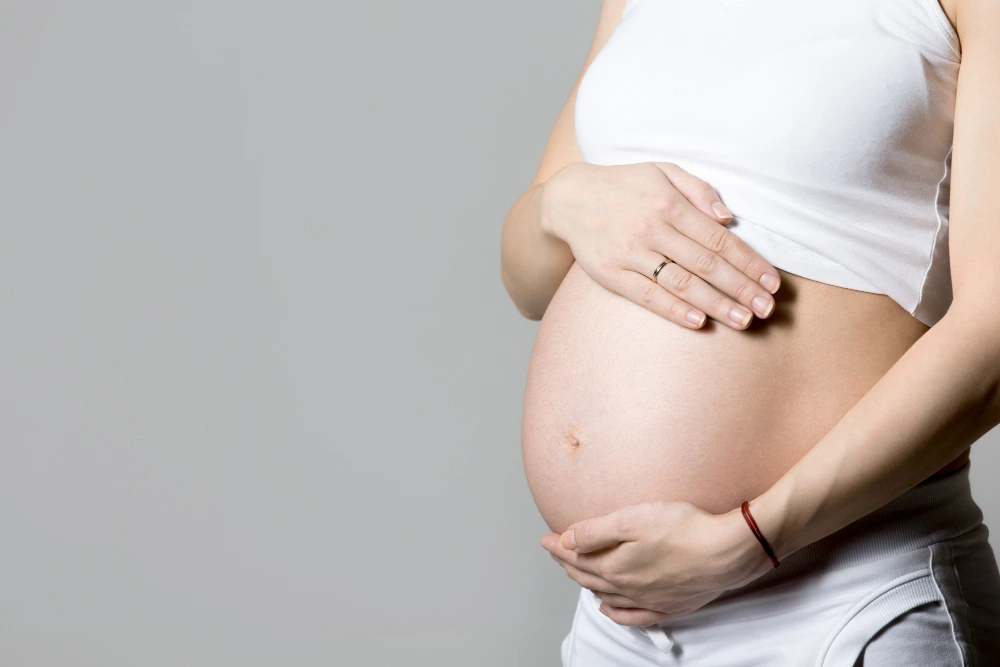
Sciatica during pregnancy is real, common, and genuinely painful – but it doesn’t have to be something you just white-knuckle through until delivery. Gentle, nervous system-focused care can help relieve sciatic pain safely during pregnancy, without medication or invasive treatment. The key is understanding what’s driving it and finding an approach that works with your changing body, not against it.
Why Sciatica Happens During Pregnancy
The sciatic nerve is the longest nerve in the body, running from the lower back through the hips and buttocks and down each leg. During pregnancy, several things happen that can put pressure on this nerve or irritate the surrounding tissue.
As the uterus grows, it shifts the center of gravity forward. The lower back curves more, the pelvis tilts, and the muscles around the hips and lower spine work harder to compensate. This postural shift can compress or irritate the sciatic nerve directly. In other cases, the baby’s position – particularly in the third trimester – places direct pressure on the nerve from the inside.
Hormonal changes also play a role. The hormone relaxin, which helps loosen the ligaments of the pelvis in preparation for birth, can also create instability in the joints of the lower back and sacroiliac area. When those joints move in ways they’re not used to, nerve irritation often follows.
The result is that familiar, sharp, shooting pain that runs from the low back down through the buttock and into the leg – sometimes all the way to the foot. For some women it comes and goes. For others it becomes a constant companion through the later months of pregnancy.
Is It Actually Sciatica – or Something Else?
Not all pregnancy-related leg or back pain is true sciatica. Piriformis syndrome – where the piriformis muscle in the buttock compresses the sciatic nerve – is very common during pregnancy and often feels similar. Sacroiliac joint dysfunction, which is also extremely common due to relaxin and postural changes, can also cause shooting pain down the leg that mimics sciatica.
The distinction matters because the most effective approach depends on what’s actually causing the pain. This is one of the reasons a thorough assessment before starting any care matters – not just for effectiveness, but for safety.
What Makes Pregnancy Sciatica Different to Treat
Most of the standard approaches for sciatica are either off the table or limited during pregnancy. Anti-inflammatory medications are generally not recommended, especially in the third trimester. Steroid injections carry risks. And many traditional chiropractic techniques involve positioning or pressure that isn’t appropriate for a pregnant body.
This leaves a lot of pregnant women feeling like they just have to endure it. That’s not true – but it does mean the approach needs to be specifically suited to pregnancy.
Network spinal care is particularly well-suited here for a few reasons. First, it uses extremely light, gentle touches along the spine – there’s no forceful manipulation, no twisting, no pressure that would be inappropriate during pregnancy. Second, it works with the nervous system directly, which during pregnancy is under significant additional load from hormonal shifts, physical changes, and the emotional demands of preparing for a new baby.
When the nervous system is less stressed and more adaptable, the body often finds better ways to manage the postural changes of pregnancy – reducing the muscle tension and compensation patterns that contribute to sciatic nerve irritation in the first place.

The Nervous System During Pregnancy
Pregnancy is one of the most demanding things a nervous system navigates. The physical changes are enormous and rapid. The hormonal fluctuations are significant. The emotional and psychological weight of becoming a parent – whether for the first time or the fourth – adds another layer.
Many women arrive at pregnancy already carrying a nervous system that’s been under chronic stress. Work pressure, sleep debt, past experiences – all of it is already in the system before the pregnancy begins. Then pregnancy adds to that load, and the nervous system responds the way it always does to overload: it goes into defense mode.
In defense mode, muscle tension increases throughout the body – including in the muscles of the lower back, hips, and pelvis. That tension adds to the compression on the sciatic nerve. It also means the body is less adaptable, less able to make the subtle postural adjustments that would naturally reduce nerve irritation.
This is why addressing the nervous system – not just the local pain – tends to produce better results for pregnant women dealing with sciatica. When the nervous system has more capacity to adapt, the body handles the demands of pregnancy better across the board.
What Care Looks Like at Life Potential Chiropractic
When a pregnant patient comes to us in Lancaster with sciatic pain, we start with a conversation about what she’s experiencing, when it started, and what makes it better or worse. We also conduct our Stress Response Evaluation – the HRV and brainwave assessment that gives us an objective picture of where her nervous system is at.
From there, network spinal care sessions are adapted to the stage of pregnancy. Positioning is modified as the belly grows. The touches used are always gentle and specific. There’s nothing in the approach that requires a woman to lie face-down or to be in positions that create pressure on the abdomen.
Most pregnant patients find the sessions deeply relaxing – which is itself therapeutic for a nervous system under significant load. And many begin noticing changes in their sciatic symptoms within the first several sessions, though results vary depending on the cause and severity of the nerve irritation.
Beyond Pain Relief: Supporting the Whole Pregnancy
One thing I’ve found in working with pregnant patients is that the benefits of nervous system care extend well beyond the sciatica. Women often report better sleep, reduced anxiety, improved digestion, and a greater sense of calm as their nervous system becomes less overloaded. These aren’t side effects – they’re what happens when the nervous system has more capacity to regulate the body well.
This matters for birth preparation too. A nervous system that’s learned to shift into a state of ease is going to be better equipped for the demands of labor – physically and emotionally – than one that’s been stuck in fight-or-flight for months. While we’re not making specific claims about birth outcomes, the connection between nervous system health and the body’s ability to navigate major physical events is well established.
A Note on Safety
Network spinal care is gentle by design. That said, any care during pregnancy should be approached thoughtfully. We always work within appropriate boundaries for each stage of pregnancy, and we coordinate with a patient’s OB or midwife when relevant. If there are complications or high-risk factors present, we take those into account in every decision about care.
Our goal is always to support the healthiest possible pregnancy – which means being honest about what we can help with and transparent about when other providers need to be involved.
Frequently Asked Questions
Q: Is chiropractic care safe during pregnancy?
A: Network spinal care uses very light, gentle touches and no forceful manipulation, making it well-suited to pregnancy. We adapt positioning and approach for each trimester. That said, we always conduct a full assessment before beginning care and take any high-risk factors or complications seriously. If you have concerns, we’re happy to discuss them with you and coordinate with your OB or midwife.
Q: When in pregnancy does sciatica usually start?
A: It most commonly develops in the second and third trimesters, as the uterus grows large enough to shift posture and potentially place pressure on the sciatic nerve. However, some women experience it earlier, particularly if they had pre-existing lower back issues or significant postural imbalances before pregnancy.
Q: Will the sciatica go away after I deliver?
A: For many women, sciatic symptoms improve significantly after delivery once the pressure from the growing uterus is gone and posture begins to normalize. However, the postpartum period brings its own physical demands – nursing, carrying, sleep deprivation – and the nervous system stress of new parenthood. Some women find that without addressing the underlying nervous system patterns, symptoms persist or shift into other forms of discomfort after birth.
If you’re dealing with sciatica during pregnancy in Lancaster and want a safe, gentle option for relief, call Life Potential Chiropractic at (717) 847-6498 or schedule your $29 Discovery Session to talk through what’s happening and what we can do to help.