
Anxiety isn’t just in your head. It lives in your body—the tight shoulders, the shallow breathing, the racing heart when nothing threatening is actually happening. That’s your nervous system responding to perceived danger, even when there isn’t any.
So can chiropractic care help? The short answer is: for many people, yes. Not because we’re treating anxiety directly, but because we’re addressing the nervous system patterns that keep the body stuck in stress mode.
The Nervous System Connection
Your autonomic nervous system controls the functions you don’t think about—heart rate, digestion, breathing, stress response. It has two main branches:
Sympathetic handles your fight-or-flight response. It’s meant for short bursts of danger.
Parasympathetic handles rest, recovery, and calm. It’s meant to be your default state.
When someone experiences chronic anxiety, the sympathetic side often dominates. The body stays on alert even when there’s no real threat. Sleep suffers. Digestion gets disrupted. Small stressors feel overwhelming because the system is already maxed out.
This isn’t a character flaw or a choice. It’s physiology. And because the spine directly influences nervous system function, addressing spinal tension can shift the balance.
What the Research Shows

Several studies have explored the connection between chiropractic care and anxiety symptoms:
A study published in the Journal of Manipulative and Physiological Therapeutics examined the effects of chiropractic adjustments on blood pressure and anxiety. Subjects who received active treatment showed reductions in state anxiety compared to placebo and control groups.
Research on heart rate variability—a key marker of nervous system balance—has shown promising results. A multi-site clinical study found that chiropractic adjustments influenced HRV measurements, with increases in parasympathetic markers suggesting improved nervous system regulation.
More recent research published in PubMed found significant reductions in anxiety, depression, fatigue, and pain following chiropractic care, along with measurable changes in brain activity patterns.
These studies don’t claim chiropractic “cures” anxiety. What they suggest is that reducing nervous system interference allows the body to better regulate itself. When the brake pedal (parasympathetic) starts working properly again, the constant sense of overdrive begins to ease.
What We See in Practice
At Life Potential Chiropractic, patients don’t usually come in saying “I need help with anxiety.” They come in with back pain, headaches, or just a sense of being worn down.
But when we run a Stress Response Evaluation—which measures heart rate variability and brainwave patterns—we often see the telltale signs. Their nervous systems are running hot. Recovery capacity is low. The body is stuck in survival mode even during rest.
As Dr. Tony works with them through Network Spinal care, something interesting often happens. The back pain or headaches improve, but so does their general sense of ease. They sleep better. They feel less reactive. Small stresses that used to throw off their whole day become manageable.
We’re not treating the anxiety. We’re helping the nervous system find its way back to balance. The anxiety often settles on its own once the body has room to regulate.
Why Gentle Matters
If your nervous system is already overwhelmed, the last thing it needs is more force. This is why the gentle approach of Network Spinal makes sense for anxiety-prone patients.
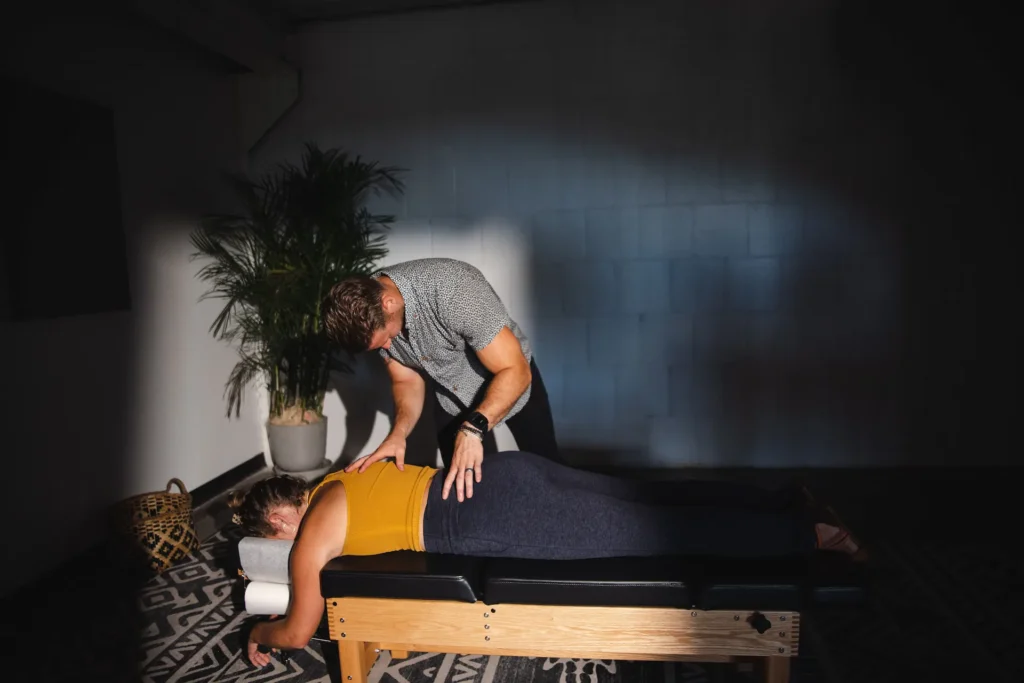
There’s no cracking or sudden movements. Instead, Dr. Tony uses light touches at specific points along the spine. The goal is to help the nervous system feel safe enough to release stored tension—not to force it into compliance.
Many patients describe the experience as deeply relaxing. Some fall asleep on the table. That’s a good sign. It means the parasympathetic system is finally getting a chance to do its job.
Anxiety Often Has Physical Roots
It’s worth considering: what if your anxiety isn’t purely psychological? What if at least part of it is your body’s response to accumulated physical stress?
Think about posture. Someone hunched over a desk all day, shoulders rolled forward, neck craned toward a screen—that position compresses the spine and creates chronic tension. That tension feeds into nervous system activation. The body reads it as stress, even if the mind doesn’t.
Old injuries play a role too. Whiplash from a car accident years ago, a fall you barely remember, sports injuries that “healed” but left residual tension. These things accumulate. The nervous system adapts by staying more vigilant, more reactive.
Addressing these physical patterns doesn’t mean ignoring the mental and emotional aspects of anxiety. It means giving the body a better foundation so the mind has room to settle.
What You Can Do Today
Chiropractic care is one piece of the puzzle. Here are a few things that support nervous system regulation:
Breathwork. Slow exhales activate the parasympathetic system. Even a few minutes of conscious breathing can shift your state.
Movement without intensity. Walking, gentle stretching, or yoga tends to calm the nervous system. High-intensity exercise is great for some people, but not always for those already running on adrenaline.
Sleep hygiene. Quality sleep is when your nervous system recovers. Blue light before bed, inconsistent sleep times, and stimulants all interfere with that process.
Reducing unnecessary inputs. News, social media, constant notifications—these keep the sympathetic system activated. Building in quiet time matters.
Getting to the Root
If you’ve tried talk therapy, medication, meditation apps, and still feel like something’s missing, it might be worth looking at what your nervous system is doing physically.
A Stress Response Evaluation gives us objective data. We can see whether your body is stuck in fight-or-flight and how well it’s recovering from stress. From there, we can create a care plan that actually addresses what’s happening.
Ready to explore a different approach? Schedule a consultation or call (717) 847-6498.