

A herniated disc doesn’t always require surgery. Many Lancaster residents find lasting relief through gentle, nervous system-focused care that helps the body heal naturally. At Life Potential Chiropractic, we use network spinal care to address the root cause of disc pain rather than just masking symptoms.
What Is a Herniated Disc?
Your spine consists of 24 bones (vertebrae) stacked on top of each other with cushioning discs between them. These discs act like shock absorbers, with a tough outer layer and a gel-like center.
A herniated disc happens when the outer layer tears or weakens, allowing the inner gel to push out. This bulging material can press on nearby nerves, causing pain, numbness, tingling, or weakness that radiates down your arm or leg.
The terms “herniated disc,” “bulging disc,” “slipped disc,” and “ruptured disc” are often used interchangeably. While there are technical differences, they all describe similar problems with your spinal discs.
Common Symptoms of a Herniated Disc
Not everyone with a herniated disc experiences symptoms. In fact, many people have disc bulges that show up on imaging but cause no pain at all. When symptoms do occur, they typically include:
Radiating pain: Sharp, shooting pain that travels down your arm (cervical herniation) or leg (lumbar herniation). This is often worse than the back or neck pain itself.
Numbness and tingling: You might feel pins and needles or a loss of sensation in specific areas depending on which nerve is affected.
Muscle weakness: The affected arm or leg may feel weaker, making it harder to lift objects or walk normally.
Pain that worsens with certain movements: Bending, twisting, coughing, or sneezing often intensifies the discomfort.
In my Lancaster practice, I’ve noticed that many patients dismiss these early warning signs until the pain becomes unbearable. The sooner you address a herniated disc, the better your chances of avoiding more aggressive interventions.
Why Traditional Treatment Often Falls Short
Most people with herniated discs follow a predictable path: pain medications, physical therapy, injections, and eventually surgery if nothing else works. Here’s the problem with this approach.
Pain medications mask symptoms without addressing why the disc herniated in the first place. Your nervous system remains stressed, your posture stays misaligned, and the underlying tension continues.
Physical therapy can help strengthen muscles, but if your nervous system is stuck in a protective, braced pattern, those muscles will keep tightening back up. You’re fighting against your own body’s defense mechanism.
Epidural injections provide temporary relief for some people, but they don’t heal the disc or change the conditions that caused the herniation. Many patients find themselves getting repeated injections with diminishing returns.
Surgery should be a last resort. While it’s sometimes necessary for severe cases with significant nerve damage, studies show that many people who have disc surgery still experience pain years later. Surgery doesn’t address the nervous system patterns that contributed to the problem.
How Your Nervous System Creates (and Perpetuates) Disc Problems
Here’s what most people don’t understand about herniated discs: the disc itself is rarely the root problem.
Your nervous system controls everything in your body, including the muscles that support your spine. When your nervous system gets stuck in a chronic stress response (what we call “defense physiology”), those muscles stay contracted and tight.
Think about it this way. When you’re stressed or anxious, where do you hold tension? For most people, it’s the neck, shoulders, and lower back. Now imagine holding that tension 24/7 without realizing it.
This constant muscle tension compresses your spine, increases pressure on your discs, and prevents proper movement and circulation. Over time, a disc that’s under constant pressure will eventually give out. The herniation is the symptom, not the cause.
Even after a disc injury occurs, your nervous system’s stress response can prevent healing. Your body stays in protection mode, muscles remain tight, and inflammation persists because your nervous system never gets the signal that it’s safe to relax and repair.
The Network Spinal Approach to Herniated Discs
At Life Potential Chiropractic, we take a completely different approach to herniated disc care. Instead of focusing solely on the injured disc, we address the nervous system patterns that created the problem in the first place.
Network spinal care uses gentle, specific touches along your spine to help your nervous system shift from a stressed, protective state into a healing state. We’re not forcing your spine into position or cracking bones. We’re teaching your nervous system to reorganize itself.
When your nervous system relaxes out of defense mode, several things happen naturally. The chronic muscle tension releases, reducing compression on your discs. Circulation improves, bringing nutrients to the injured area and removing inflammatory waste products. Your body’s natural healing mechanisms activate.
In my experience treating herniated disc patients in Lancaster, I’ve found that this gentle approach often works when more aggressive treatments have failed. Your body wants to heal. It just needs the right conditions.
What to Expect from Network Spinal Care for Your Herniated Disc
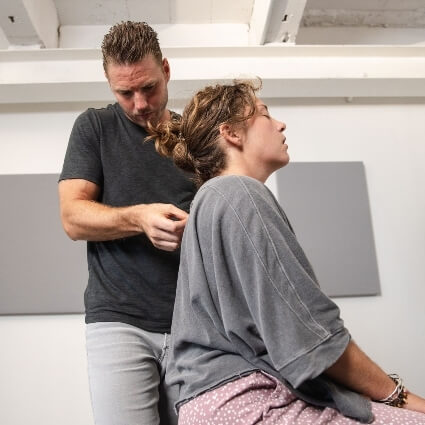
Network spinal care for herniated discs is a process, not a quick fix. Here’s what typically happens.
Initial Assessment: We start with a thorough evaluation including our Stress Response Evaluation. This two-part assessment uses both HRV (heart rate variability) and brainwave analysis to measure how your nervous system is actually functioning. We need to see where you’re stuck in stress patterns before we can help you release them.
Gentle Care Sessions: During each session, I use light touches at specific points along your spine. Most patients find it relaxing. You’re not being twisted or popped. You might feel sensations as your nervous system reorganizes – warmth, tingling, spontaneous movement, or deep breaths. These are signs your body is releasing stored tension.
Progressive Changes: Over weeks and months, patients typically notice their pain decreasing, their range of motion improving, and their overall stress levels dropping. The disc has more space to heal because the constant pressure has decreased. Many also report better sleep, more energy, and improved mood – all signs that the nervous system is functioning better.
Timeline: Most herniated disc patients work with us for 3-9 months depending on severity and how long the problem has existed. This isn’t a quick fix, but it’s addressing the root cause rather than just managing symptoms.
I’ll be honest with you. If you’re looking for instant relief, this might not be the right approach. But if you want to actually heal your nervous system and give your body the best chance to repair that disc naturally, network spinal care offers something traditional treatments don’t.
When Surgery Might Still Be Necessary
Network spinal care helps many people avoid surgery for herniated discs, but it’s not appropriate for every case. You should consider surgical consultation if you experience:
Progressive weakness in your arm or leg that’s getting worse despite conservative care. This suggests increasing nerve damage that needs immediate attention.
Loss of bowel or bladder control (cauda equina syndrome). This is a medical emergency requiring immediate surgical intervention.
Severe pain that doesn’t respond to any conservative treatment after several months. Sometimes the mechanical damage is too severe for the body to heal on its own.
I’m not anti-surgery. I’m pro-healing. For most people, gentle nervous system care offers a path to recovery without the risks and recovery time of surgery. But when surgery is truly necessary, I’ll tell you.
Real Results from Lancaster Patients
I’ve worked with dozens of Lancaster County residents who came to me terrified of surgery for their herniated discs. Many had already tried physical therapy, injections, and medications without lasting relief.
What they found through network spinal care wasn’t just pain relief. They discovered that when their nervous system relaxed, their whole body functioned better. The disc pain improved, yes, but so did their sleep, their digestion, their stress levels, and their overall quality of life.
One patient told me she finally understood why nothing else had worked. “You’re not just treating my back,” she said. “You’re teaching my whole body how to stop being so tense all the time.” That’s exactly right.
Taking the First Step
If you’re dealing with a herniated disc in Lancaster and you’re looking for an alternative to surgery, network spinal care might be the answer you’ve been searching for.
Our approach isn’t about forcing your body to change. It’s about creating the conditions that allow natural healing to occur. When your nervous system shifts from stress to ease, your body has the space and resources it needs to repair.
Ready to explore whether network spinal care can help your herniated disc? Call (717) 847-6498 or schedule your $29 discovery session to learn how we can help you heal naturally.
Frequently Asked Questions
Q: How long does it take to heal a herniated disc with network spinal care?
A: Most patients work with us for 3-9 months, though you’ll typically notice improvements within the first few weeks. Healing time depends on how severe the herniation is, how long you’ve had it, and how quickly your nervous system responds to care. We’re addressing root causes, not just symptoms, so it takes time.
Q: Is network spinal safe for herniated discs?
A: Yes. Network spinal uses gentle touches along the spine – there’s no forceful twisting, cracking, or manipulation that could aggravate a herniated disc. The approach is specifically designed to help your nervous system relax, which reduces pressure on the injured disc.
Q: Will my insurance cover network spinal care for a herniated disc?
A: Coverage varies by insurance plan. We recommend contacting your insurance provider to ask about chiropractic coverage. Our office can provide you with the necessary documentation for reimbursement if your plan includes out-of-network benefits.
Q: Can I do network spinal care while also doing physical therapy?
A: Absolutely. Many patients combine network spinal care with physical therapy and find the two approaches complement each other well. When your nervous system is functioning better, you often get more benefit from strengthening exercises because your body isn’t fighting against itself.