Understanding what sciatica is, how long recovery typically takes, and what treatment options are available empowers you to take control of your healing journey. Whether your symptoms are recent or you’ve been struggling with recurring episodes, knowing what to expect helps you make informed decisions about your care.
In this comprehensive guide, we’ll explore the natural course of sciatica, effective treatment approaches—including chiropractic care—and strategies to prevent future episodes. Most importantly, we’ll answer that crucial question: does sciatica go away, and what can you do to speed your recovery?
What is Sciatica?
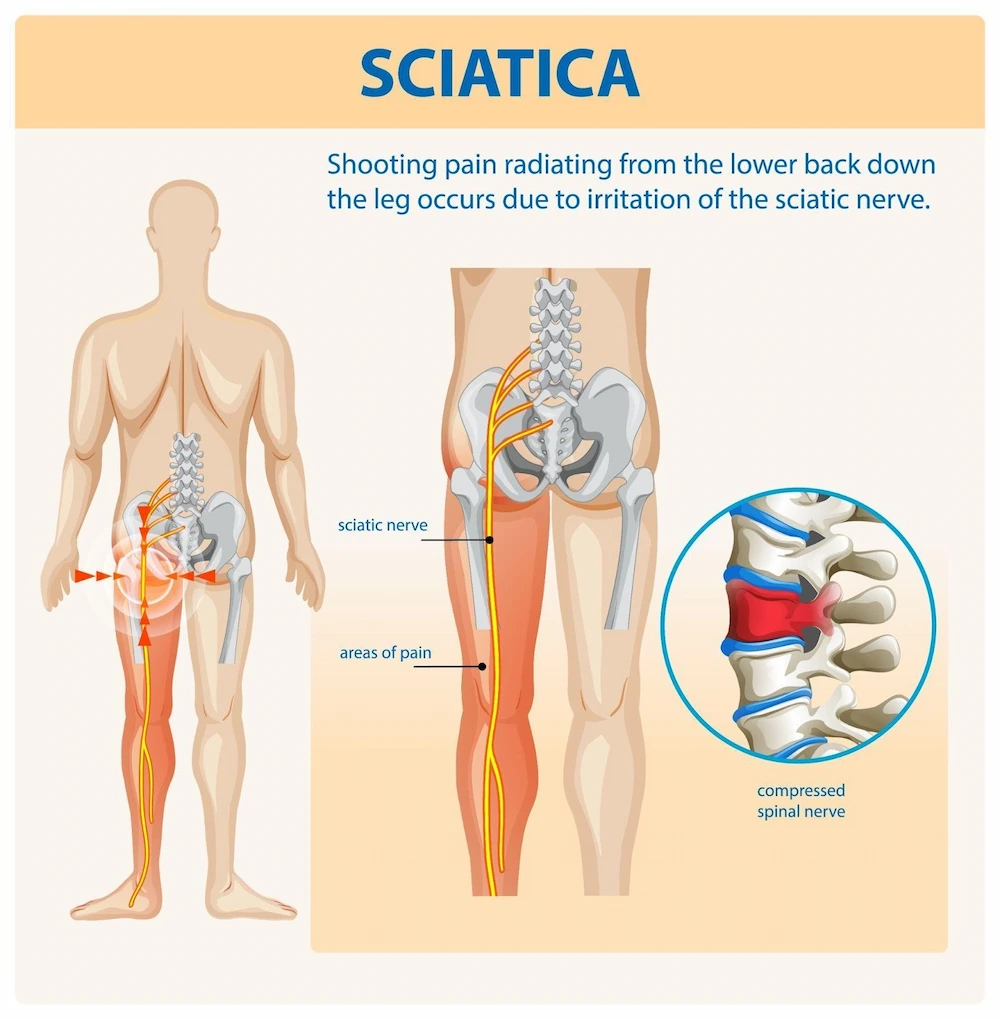
Definition and Causes of Sciatica
According to Johns Hopkins Medicine, sciatica occurs when the sciatic nerve becomes pinched, usually by a herniated disk in your spine or by an overgrowth of bone (bone spur) on your vertebrae.
Common causes of sciatica include:
- Herniated or bulging disc: The most common cause, occurring when the soft center of a spinal disc pushes through a tear in the outer ring
- Spinal stenosis: Narrowing of the spinal canal that puts pressure on nerves
- Degenerative disc disease: Age-related wear and tear of spinal discs
- Spondylolisthesis: A condition where one vertebra slips forward over another
- Spinal tumors or infections: Rare but serious causes of nerve compression
- Pregnancy: Hormonal changes and the growing uterus can compress the sciatic nerve
Understanding the underlying cause is crucial for effective treatment. For more information about related conditions, visit our page on sciatica and degenerative disc disease.
Common Symptoms of Sciatica
Sciatica produces distinctive symptoms that help healthcare providers identify the condition. The hallmark symptom is pain that radiates from your lower back down through your buttock and into your leg.
Typical sciatica symptoms include:
- Sharp, shooting pain: Often described as electric shock-like sensations traveling down the leg
- Burning or tingling: Numbness or pins-and-needles sensations along the nerve pathway
- Muscle weakness: Reduced strength in the affected leg or foot
- Pain that worsens with movement: Sitting, standing up, coughing, or sneezing may intensify symptoms
- One-sided symptoms: Usually affecting only one leg, though the pain may vary in intensity
The pain can range from mild discomfort to severe, debilitating pain that makes it difficult to stand or walk. Some people experience constant pain, while others have intermittent symptoms triggered by specific movements or positions.
For more information about these and other symptoms, visit our comprehensive symptoms page.
Natural Course and Recovery Time

Natural Course and Recovery Time
The duration of sciatica varies considerably from person to person, depending on the underlying cause and severity of nerve compression. The encouraging news is that most people with acute sciatica have a favourable prognosis, though recovery timelines can extend longer than many expect.
Research shows that while many patients experience improvement within the first several weeks, approximately 20-30% continue to have persisting problems after one to two years. This means setting realistic expectations is important—substantial recovery often occurs, but it may take time, and some people experience ongoing symptoms even after the acute phase resolves.
In about 90% of cases, sciatica results from a herniated disc compressing a nerve root. Less commonly, lumbar stenosis or, more rarely, tumours can be responsible.
The current consensus is that initial treatment should be conservative for approximately 6-8 weeks. Importantly, passive approaches like bed rest have largely been replaced with more active treatments. Staying mobile and engaging in appropriate movement tends to support recovery better than prolonged rest.
Imaging such as MRI is generally only indicated when “red flag” conditions are present or when disc surgery is being considered—most people don’t need imaging for diagnosis, which is typically based on history and physical examination.
For those who don’t improve with conservative care, disc surgery remains an option. Research suggests surgery may provide quicker relief of leg pain compared to conservative treatment, but no clear differences in outcomes have been found after one or two years. This means that while surgery can speed up recovery for some, many patients ultimately reach similar outcomes regardless of the path they choose.
If your symptoms persist beyond the initial conservative treatment period or you experience warning signs like progressive weakness, loss of bladder or bowel control, or severe unrelenting pain, consult a healthcare professional promptly.
Factors Influencing Recovery Time
Several factors determine how quickly your sciatica resolves:
Underlying cause severity:
Age and overall health:
Treatment approach:
Activity level and compliance:
Previous episodes:
First-time sciatica generally resolves more quickly than recurring episodes, which may indicate underlying structural problems requiring attention.
Smoking status:
Smoking impairs circulation and slows healing of all tissues, including nerves and discs.
Body weight:
Treatment Options for Sciatica

Conservative Treatments and Pain Management
Conservative, non-surgical treatments are effective for the vast majority of sciatica cases and should always be the first approach.
Pain management strategies
include:
- Over-the-counter medications:NSAIDs like ibuprofen reduce both pain and inflammation along the nerve pathway
- Prescription medications: For severe pain, doctors may prescribe muscle relaxants, nerve pain medications, or short courses of oral steroids
- Ice and heat therapy: Ice during the first 48-72 hours reduces inflammation, followed by heat to relax muscles and improve circulation
Physical therapy plays a crucial role in sciatica recovery. A physical therapist designs a customized program including:
- Gentle stretching exercises to reduce nerve compression
- Strengthening exercises for core and back muscles
- Posture training and body mechanics education
- Manual therapy techniques to improve mobility
Activity modification:
Avoiding activities that aggravate symptoms while maintaining gentle movement. Contrary to old advice, complete bed rest is not recommended—it can actually slow recovery.
Lifestyle adjustments
support healing:
- Using proper lifting techniques
- Taking frequent breaks from sitting
- Applying ergonomic principles at work
- Maintaining a healthy weight
Research in the British Medical Journal shows that sciatica is “caused by a herniated disc”.
For additional information about neck and back pain management, explore our resources.
Role of Chiropractic Care in Sciatica Relief
Chiropractic treatment offers an effective, drug-free approach to sciatica relief that addresses the underlying cause rather than just masking symptoms. Many patients find significant relief through chiropractic care when other treatments have provided limited results.
Chiropractic approaches for sciatica
include:
Spinal adjustments:
Precise manipulations restore proper alignment, reduce nerve compression, and improve spinal function. For sciatica patients, chiropractors use gentle, targeted techniques that avoid exacerbating symptoms.
Spinal decompression:
Soft tissue therapy:
Therapeutic exercises:
Some practices offer advanced techniques like Network Spinal care, which works with the nervous system to promote healing through gentle spinal contacts.
For comprehensive information about conditions treated with chiropractic care, visit our conditions page.
When Surgery is Necessary
Surgery is reserved for specific situations where conservative treatments have failed or when serious neurological compromise is present.
Underlying cause severity:
Spinal adjustments:
Surgical intervention may be considered when:
- Conservative treatment for 6-12 weeks shows no improvement
- Progressive muscle weakness or loss of function occurs
- Cauda equina syndrome develops (loss of bowel/bladder control—a medical emergency)
- Severe, intolerable pain significantly impairs quality of life
Most spine surgeons agree that exhausting conservative options, including chiropractic care, is essential before considering surgery for sciatica.
Signs Your Sciatica is Improving
Early Signs of Relief
The first indications that your sciatica is improving may be subtle, but they’re important markers of healing:
Pain centralization:
One of the earliest and most significant signs is when pain that previously extended down your leg begins moving back toward your spine. Even if pain intensity hasn’t decreased, this migration toward the center indicates the nerve is decompressing.
Reduced pain intensity:
Improved sleep:
Decreased medication needs:
Better tolerance for activities:
Being able to sit, stand, or walk for longer periods without pain flare-ups demonstrates functional improvement.
Later Stages of Recovery
As healing progresses, additional improvements become noticeable:
Increased range of motion:
Greater flexibility in bending, twisting, and moving without triggering symptoms indicates reduced nerve irritation and improved spinal mechanics.
Strength returning:
Numbness and tingling resolution:
Return to normal activities
Symptom-free periods lengthening:
Longer intervals between pain episodes or complete symptom resolution for extended periods indicates substantial healing.
No morning stiffness:
Preventing Sciatica Recurrence
Successfully treating your current episode of sciatica is important, but preventing future episodes is equally crucial. Research shows that approximately 20-30% of people who recover from sciatica experience recurrence within one year without proper preventive measures.
Lifestyle and Posture Improvements
Maintain proper posture:
- Sit with feet flat on the floor, knees at 90 degrees
- Use lumbar support to maintain natural spine curve
- Keep shoulders relaxed and aligned over hips
- Avoid slouching or leaning forward for extended periods
Optimize your workspace:
- Position computer monitors at eye level
- Use an ergonomic chair with proper support
- Take standing breaks every 30-45 minutes
- Consider a sit-stand desk for variety
Practice safe lifting techniques:
- Bend at your knees, not your waist
- Keep objects close to your body
- Avoid twisting while lifting
- Ask for help with heavy items
Make healthy lifestyle choices:
- Maintain a healthy weight to reduce spinal stress
- Quit smoking to improve circulation and disc health
- Stay hydrated to support disc hydration
- Get adequate sleep for tissue repair
Exercise and Stretching Recommendations
Recommended exercises for sciatica prevention:
- Core strengthening: Planks, bridges, and dead bugs build the muscles that support your spine
- Hamstring stretches: Tight hamstrings increase lower back stress and sciatica risk
- Piriformis stretches: Prevent compression of the sciatic nerve by the piriformis muscle
- Low-impact aerobics: Walking, swimming, or cycling maintain fitness without excessive spinal stress
- Yoga or Pilates: Improve flexibility, strength, and body awareness
Exercise guidelines:
- Start slowly and progress gradually
- Focus on proper form over intensity
- Exercise consistently—3-5 times per week
- Avoid exercises that trigger symptoms
- Work with a physical therapist or chiropractor to develop a safe program
Stretches to avoid:
Regular movement keeps discs healthy by promoting nutrient diffusion and preventing stiffness. Even on days when you can’t do a full workout, gentle stretching and walking provide significant benefits.
Chronic Sciatica: What to Know
While most sciatica cases resolve within weeks to months, approximately 20-30% of people develop chronic sciatica lasting longer than three months. Understanding chronic sciatica helps you manage it effectively if acute symptoms don’t fully resolve.
Chronic sciatica characteristics:
- Persistent or recurring symptoms lasting beyond 12 weeks
- May involve constant low-level discomfort with periodic flare-ups
- Often indicates ongoing structural problems requiring ongoing management
- Can significantly impact quality of life and daily function
Chronic sciatica characteristics:
- Untreated or inadequately treated underlying conditions
- Structural spinal problems like severe stenosis or instability
- Recurrent disc herniations
- Nerve damage from prolonged compression
- Psychological factors that amplify pain perception
Managing chronic sciatica
requires a comprehensive, long-term approach:
Ongoing professional care:
Pain management strategies:
Lifestyle modifications:
Psychological support:
Chronic pain affects mental health. Counseling, support groups, or cognitive-behavioral therapy helps cope with the emotional aspects of chronic sciatica.
Activity pacing:
Learning to balance activity and rest prevents flare-ups while avoiding deconditioning.
If your sciatica persists beyond 3 months despite treatment, consult with specialists to ensure no serious underlying conditions are present and to optimize your management strategy.
Conclusion
The good news is that both conditions usually respond well to conservative treatment, with 80-90% of patients improving without surgery. Chiropractic care offers an effective, non-invasive approach that addresses both symptoms and underlying biomechanical dysfunction.
- 80-90% of cases improve significantly within 6-12 weeks
- Conservative treatments including chiropractic care are effective for most people
- Early intervention speeds recovery and improves outcomes
- Lifestyle modifications and preventive exercises reduce recurrence risk
- Chronic sciatica can be effectively managed even when symptoms persist